
 Pin it
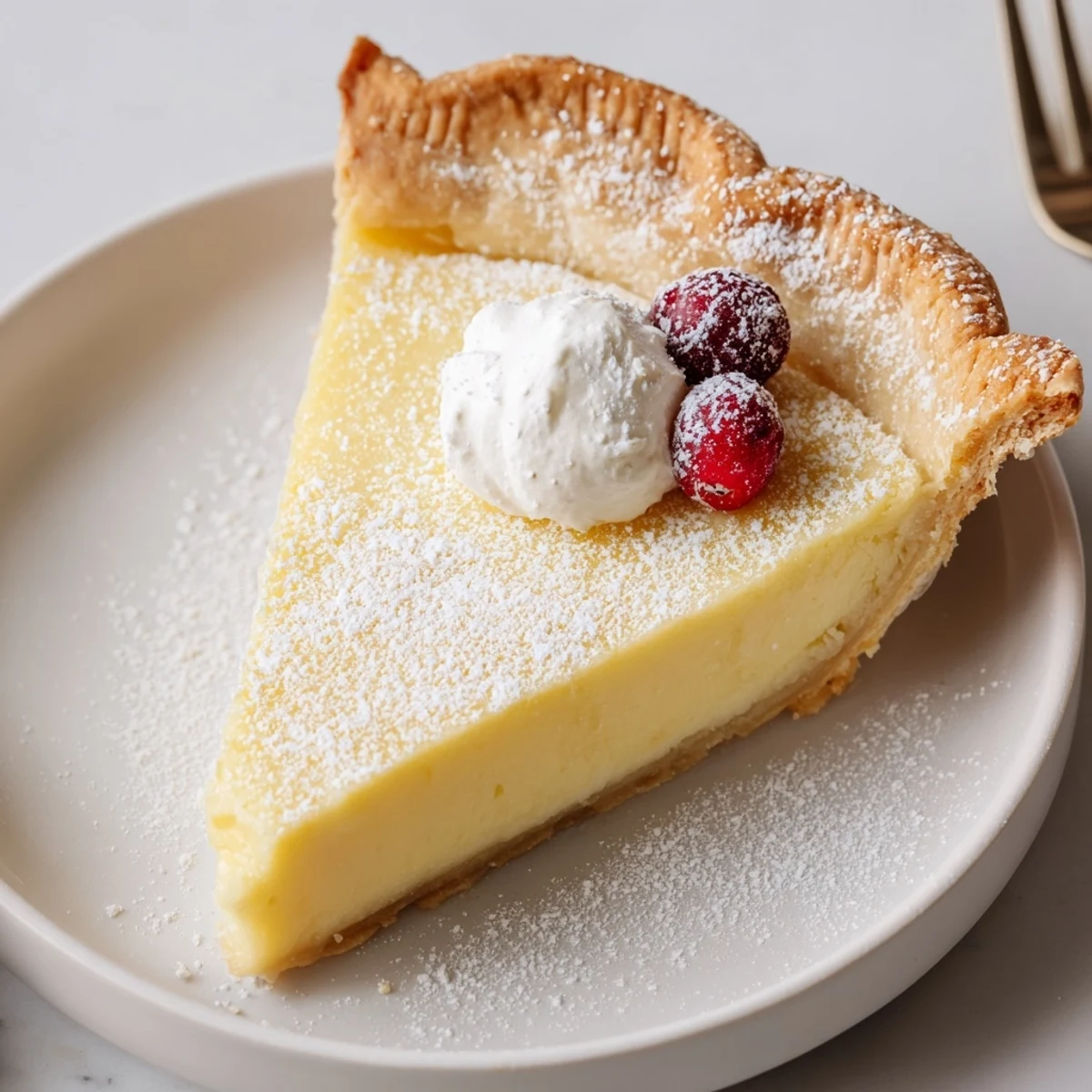
 Silky custard is tempered with warm milk and cream, whisked with eggs, sugar and cornstarch, then spiced with vanilla and cinnamon. The filling is strained for smoothness, poured into a 9-inch crust and baked 45–50 minutes until the center is just set. Cool on a rack, then chill at least two hours to fully set before slicing and serving.
There’s something about the scent of cinnamon swirling through my kitchen on chilly evenings that seems to hush the world a little. Last December, I found myself reaching for vanilla and eggs on a whim, craving that creamy nostalgia only a homemade custard pie delivers. The recipe came together almost accidentally, inspired by a half-remembered holiday conversation and the coziness of twinkling lights. As the pie baked, it was impossible not to pause and simply take in the warmth.
Serving this custard pie to a table of bundled-up friends one Christmas Eve felt like sharing a small, edible gift. Laughter and powdered sugar seemed to float in the air, making the kitchen a place I wished we could linger in forever.
Ingredients
- 9-inch unbaked pie crust: Use a sturdy, buttery crust to cradle the custard—store-bought works in a pinch, but homemade adds a flaky touch.
- Whole milk: Its richness marries well with cream, ensuring a soft, plush texture.
- Heavy cream: This is the secret to custard’s luxurious mouthfeel—don’t swap it for lighter options.
- Large eggs: Fresh eggs yield the silkiest set; room temperature helps everything blend seamlessly.
- Granulated sugar: Sweetens just enough, and helps the custard brown to a gentle golden hue.
- Cornstarch: Just a spoonful thickens the filling without heaviness.
- Vanilla extract: Go for real vanilla if you can—the warmth and aroma are holiday magic in a bottle.
- Ground cinnamon: Divided between filling and topping, it infuses every bite with warmth.
- Fine sea salt: Don’t skip it; a bit of salt wakes up the sweetness beautifully.
- Powdered sugar: Dusting the top just before serving adds snowy elegance, though it’s optional.
Instructions
- Prepare the crust:
- Set the oven to 350°F and carefully tuck your pie crust into a 9-inch pan, pressing into the corners with your knuckles for those homey, imperfect waves.
- Warm the dairy:
- Combine the milk and cream in a saucepan and heat gently until just steaming—if you hear a soft hiss, you’re there, but don’t let it boil or the custard will taste cooked.
- Whisk the base:
- In your favorite mixing bowl, whisk eggs, sugar, cornstarch, vanilla, cinnamon, and salt until silky—watch the sugar dissolve and the spices tint the mix lightly gold.
- Temper with care:
- Upon pouring the warm milk into the eggs, whisk non-stop like your best spatula depends on it—this avoids curdling and keeps everything velvety.
- Strain for smoothness:
- Run everything through a fine-mesh sieve; this tiny effort makes all the difference for that perfect, quiver-tender set.
- Fill and bake:
- Pour the custard mixture into the prepared crust and slide into the oven—bake until the center jiggles gently when nudged, about 45-50 minutes.
- Cool patiently:
- Transfer the pie to a wire rack; let it cool until barely warm, during which time the aroma will tempt hungry hands.
- Dust and chill:
- Sprinkle with cinnamon and, if you like, powdered sugar; then refrigerate for at least 2 hours for sliceable perfection.
 Pin it
 I’ll never forget the afternoon my niece dusted her slice too enthusiastically and covered half her sweater in powdered sugar. We all fell into a fit of giggles, making that custard pie a core memory in our family’s holiday lore.
Let’s Talk About Texture
Some years I tried to rush the chilling, only to discover the custard still settling into itself. Creamy, neat slices are worth the patience—you’ll notice how smooth and luscious the filling feels when it’s cold and firm.
The Scent of the Holidays
Warming milk with cinnamon and vanilla fills the kitchen with an aroma that even neighbors pause to enjoy. That fragrance is my secret signal every year that the festivities have truly begun.
Little Touches That Make It Yours
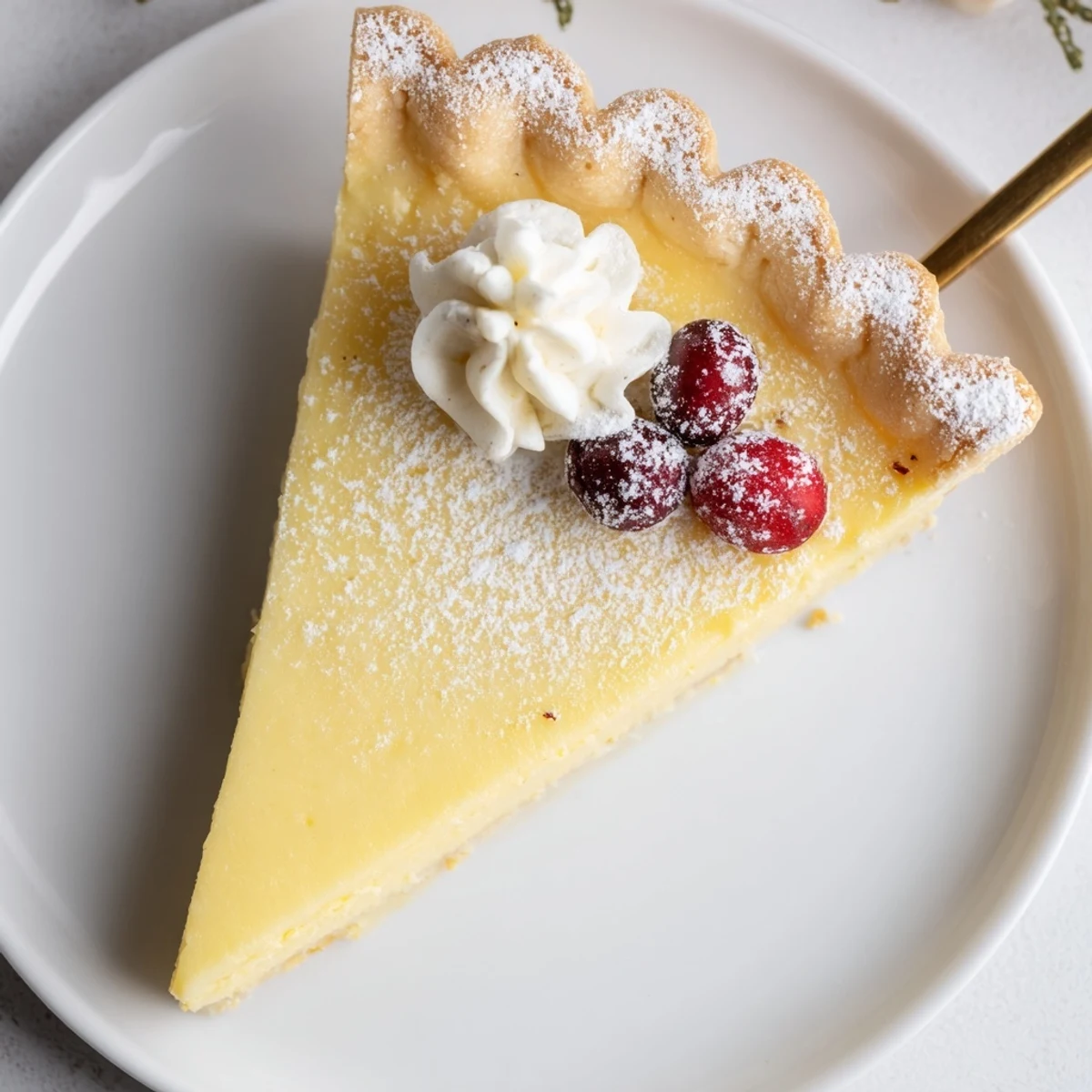
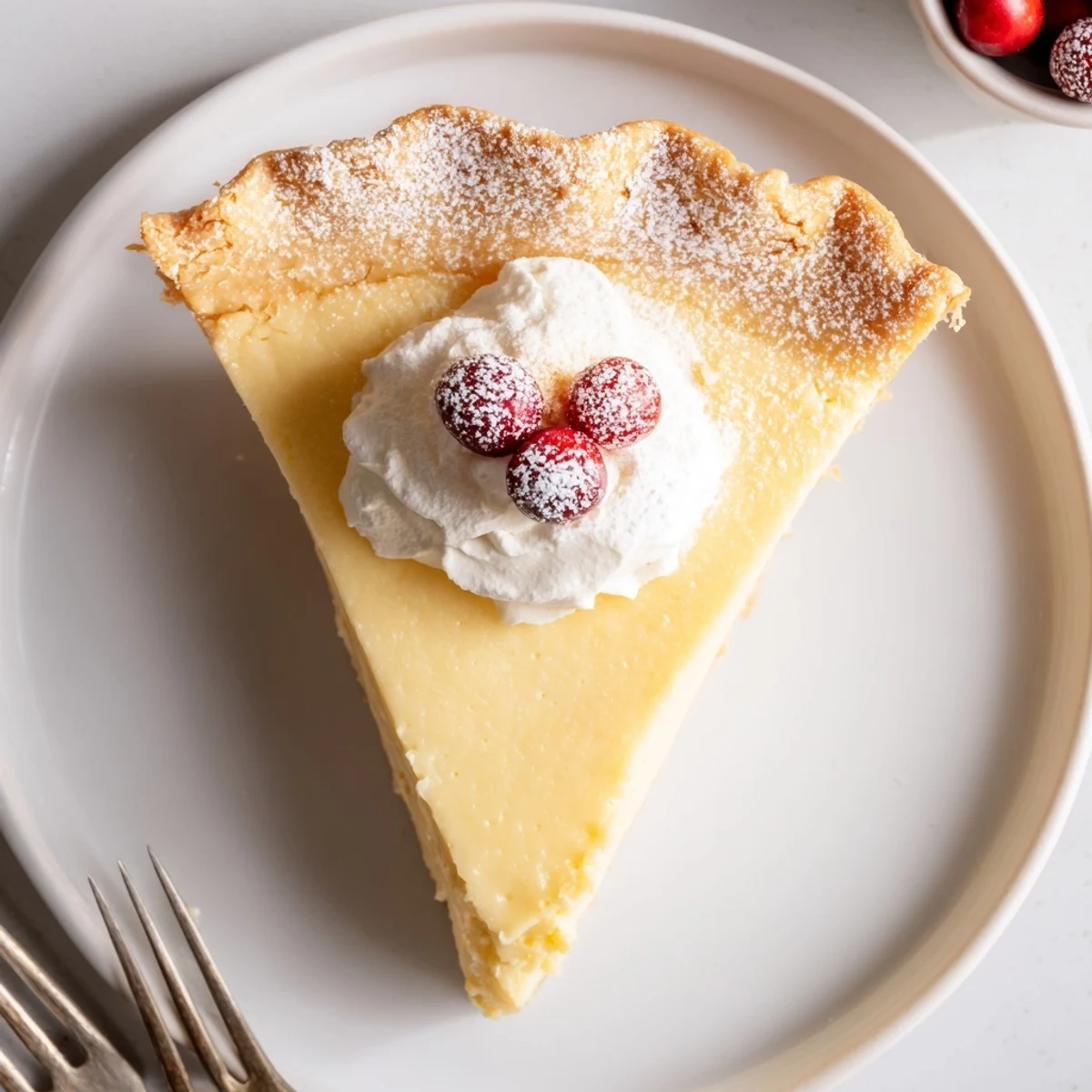
After experimenting one year, I learned a splash of bourbon in the custard adds quiet depth, and sugared cranberries or a swirl of whipped cream on top turn the pie into a showstopper.
- Remember, a fine-mesh sieve is your best ally for custard smoothness.
- If your crust starts browning too fast, loosely lay foil over the edges.
- Chill as long as you can bear before slicing—the texture truly improves.
 Pin it
 Here’s to warm kitchens, a bit of sweet cinnamon on your fingers, and pie slices that bring a little sparkle to wintry nights.
Recipe FAQs
- → How do I know the custard is done?
-
The edges should be set and the center slightly wobbly when gently shaken; residual heat will finish the set during cooling. If a knife comes out clean near the center, it's ready.
- → Can I use lower-fat milk instead of heavy cream?
-
You can reduce the cream, but whole milk and heavy cream give the silkier texture and richer mouthfeel. If using lower-fat milk, add a touch more cornstarch for stability.
- → How can I prevent a soggy bottom crust?
-
Partially blind-bake the crust for 8–10 minutes or brush the baked shell with a beaten egg white and return to the oven briefly to seal the surface before filling.
- → When should I add bourbon or brandy?
-
Stir a tablespoon or two into the custard mixture after tempering the eggs and before straining. Alcohol adds depth without altering baking time.
- → How long can I store leftovers?
-
Cover and refrigerate for up to 3 days. Chilled slices are easiest to cut cleanly; let sit a few minutes at room temperature before serving if desired.
- → What are good garnish ideas?
-
Lightly dust with powdered sugar and extra cinnamon, add a dollop of whipped cream, or decorate with sugared cranberries for a festive touch.
