
 Pin it
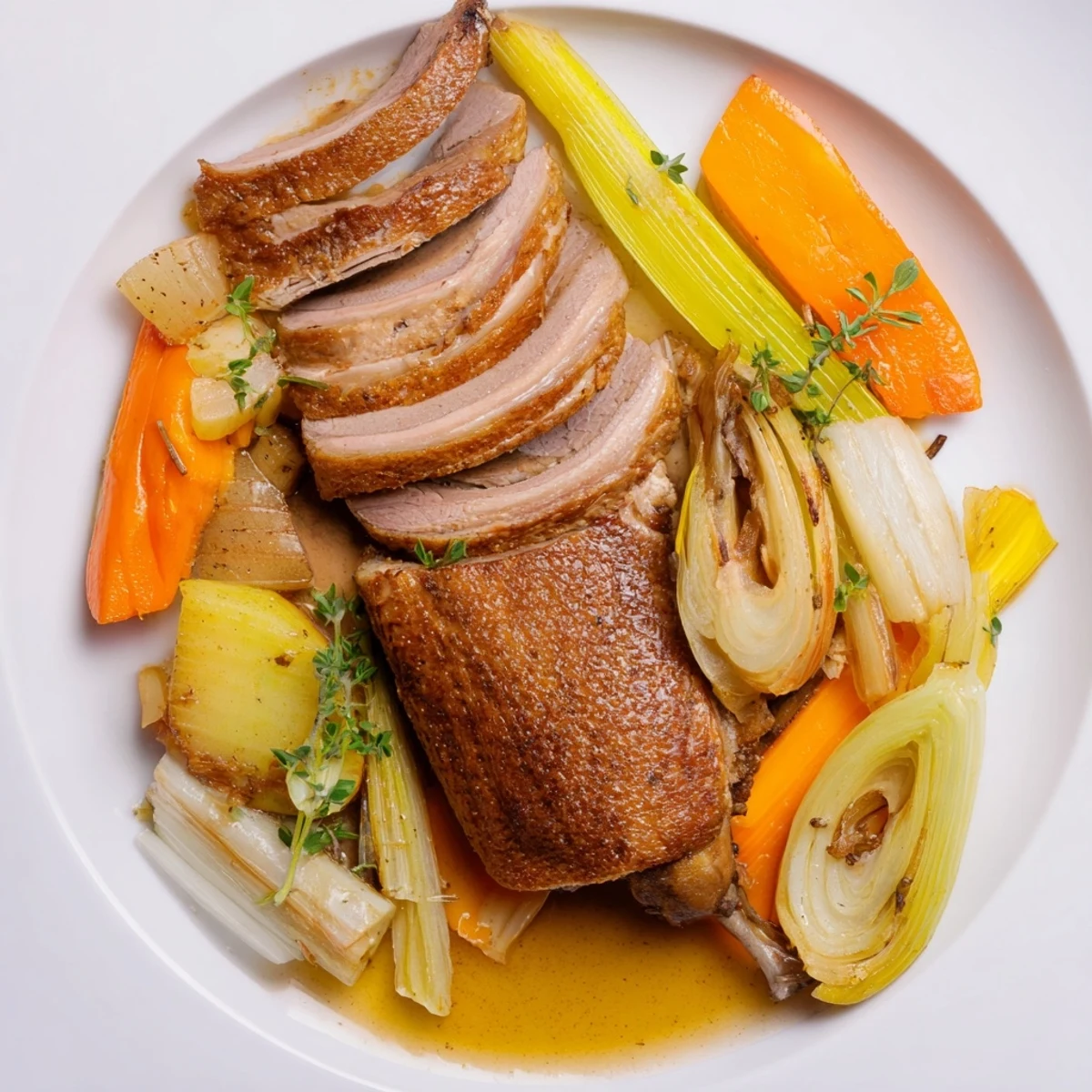
 This French-style braise starts by seasoning and searing a whole duck to render fat and develop a crisp, golden skin. Root vegetables and aromatics are sautéed, deglazed with white wine, then the bird returns to braise gently in stock with thyme, rosemary and bay. Finish uncovered at high heat to crisp the skin, rest, carve and spoon pan juices over servings for rich, balanced flavors.
The duck arrived at my door in a brown paper package on a rainy Tuesday, a gift from a farmer friend who simply said you will figure out what to do with it. I had never cooked a whole duck before and the sheer amount of fat hidden beneath that pale skin caught me off guard when I began trimming. What started as a nervous experiment became one of the most rewarding afternoons I have ever spent in a kitchen.
My neighbor wandered over while the duck was searing and stood in the doorway speechless for a full minute before asking what on earth I was making. We ended up sharing the finished bird at my kitchen counter, tearing pieces off with our fingers and soaking up the juices with crusty bread.
Ingredients
- Whole duck (4 to 5 lbs): Trim excess fat carefully because it renders significantly during cooking and too much can make the braise greasy.
- Kosher salt and black pepper: Season generously and do not forget inside the cavity where flavor often gets overlooked.
- Carrots: Cut into uniform chunks so they cook evenly and hold their shape through the long braise.
- Parsnips: These add a gentle sweetness that balances the richness of the duck beautifully.
- Leeks: Use only the white and light green parts and wash them thoroughly because trapped grit will ruin the finished sauce.
- Yellow onion: Quartered large pieces melt into the braising liquid and give it body.
- Celery: Adds an earthy backbone that you might not notice directly but would absolutely miss if it were gone.
- Garlic cloves: Smashed rather than minced because they release flavor slowly over the long cook time.
- Olive oil: Just enough to get the sear started before the duck fat takes over.
- Dry white wine: Something you would enjoy drinking because the flavor concentrates as it reduces.
- Chicken stock: Low sodium is best so you can control the salt level of the finished braising liquid.
- Thyme, rosemary, and bay leaf: Fresh herbs make a noticeable difference here since they steep in the liquid for over an hour.
- Fresh parsley: An optional finishing touch that adds brightness to cut through the richness.
Instructions
- Preheat and prepare:
- Set your oven to 350 degrees Fahrenheit and give it time to fully come to temperature while you prep the duck.
- Season the duck:
- Pat the bird thoroughly dry with paper towels then season everywhere with salt and pepper including inside the cavity where people often forget.
- Build the crust:
- Heat olive oil in a large Dutch oven over medium high heat and place the duck breast side down, letting it sear undisturbed for five to seven minutes until the skin turns a deep amber before flipping to brown the other side.
- Drain the fat:
- Pour off all but about two tablespoons of the rendered fat from the pot because too much will make everything heavy and greasy.
- Sauté the vegetables:
- Toss in all the prepared vegetables and let them cook for seven to eight minutes, stirring occasionally, until they pick up some color and begin to soften at the edges.
- Deglaze with wine:
- Pour in the white wine and scrape up every browned bit from the bottom of the pot because that fond is concentrated flavor that will transform the finished dish.
- Nestle and braise:
- Return the duck to the pot resting on top of the vegetables, add the stock and herbs, cover tightly, and slide it into the oven for an hour and a half, basting the bird with the liquid once halfway through.
- Crisp the finish:
- Remove the lid and increase the heat to 425 degrees Fahrenheit for a final twenty minutes, watching closely until the skin blisters and turns deeply golden and irresistible.
- Rest and serve:
- Let the duck rest for ten minutes before carving, then serve over the braised vegetables with plenty of the cooking juices spooned on top and a scattering of fresh parsley.
 Pin it
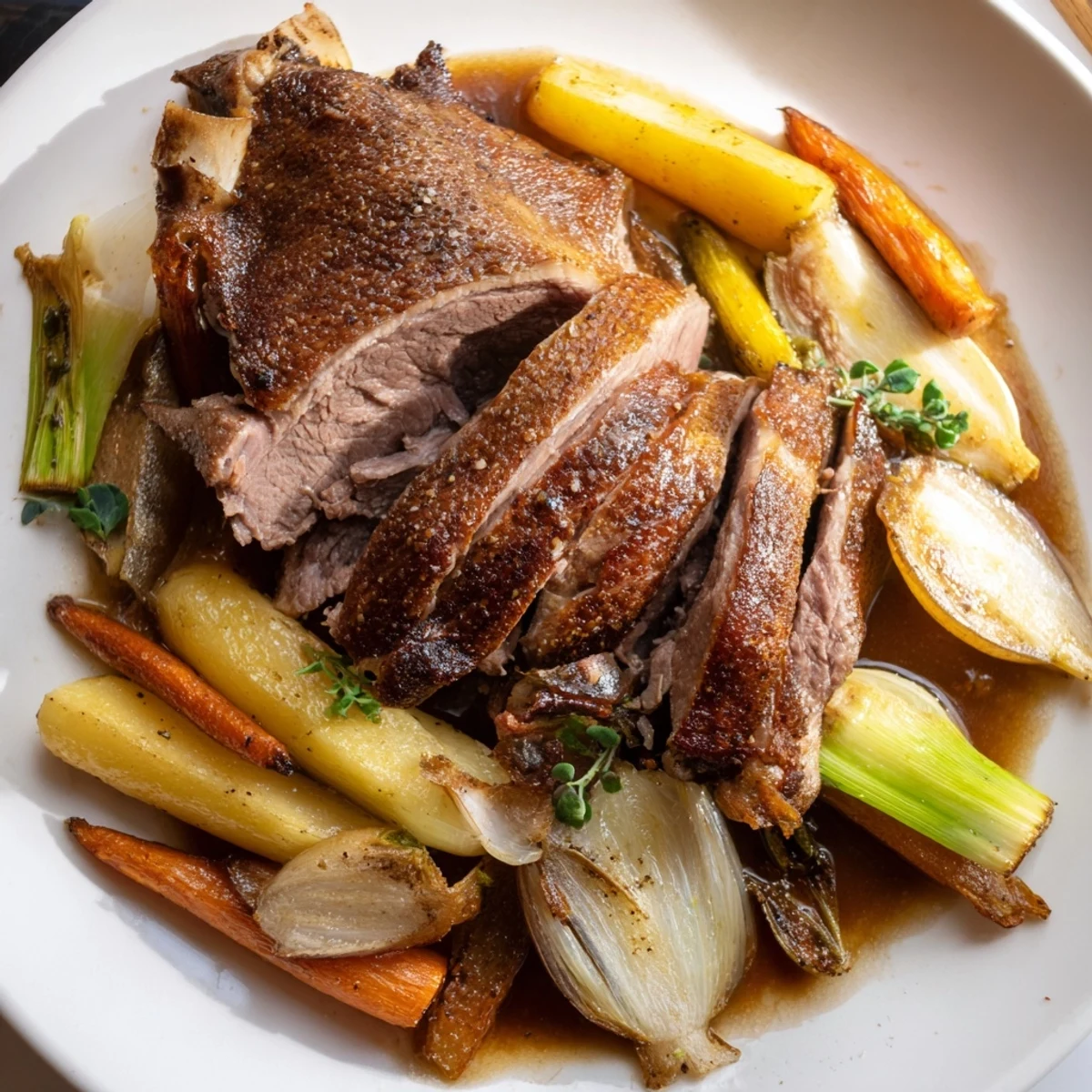
 That evening with my neighbor turned into a standing dinner tradition that lasted through the entire winter, always centered around whatever arrived in a brown package that week.
Choosing the Right Wine for Braising
A dry Chenin Blanc from the Loire Valley brings a bright acidity that cuts through the richness of the duck fat beautifully. A light Pinot Noir also works if you prefer something with a little more depth and berry warmth for cooler evenings.
Swapping Vegetables Through the Seasons
Root vegetables are forgiving here so use what you have on hand or what looks best at the market. Turnips, rutabaga, sweet potatoes, and even halved brussels sprouts all braid wonderfully in the duck juices.
Tools That Make This Easier
A heavy Dutch oven is truly nonnegotiable because it moves seamlessly from stovetop to oven and distributes heat evenly throughout the long braise.
- Use tongs with a firm grip because a whole duck is heavy and slippery when coated in fat.
- A wide ladle makes basting and serving the braising juices much less messy.
- Always check your stock labels for hidden gluten if cooking for someone with sensitivities.
 Pin it
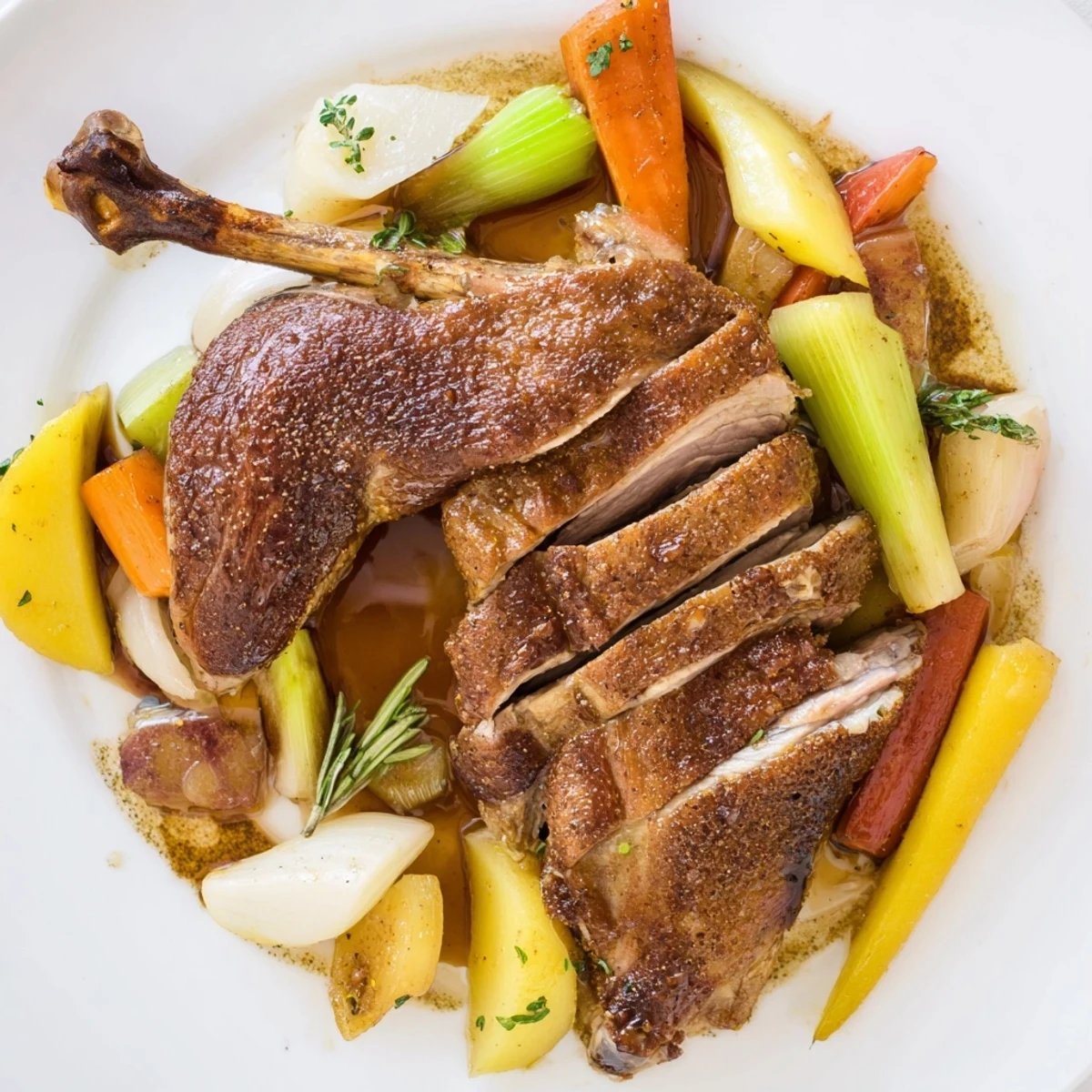
 This dish turns an ordinary afternoon into something that feels like a small celebration, one crispy golden bite at a time. Share it with someone who appreciates the quiet magic of a kitchen filled with good smells.
Recipe FAQs
- → How do I get extra-crispy skin?
-
Dry the skin thoroughly and salt it well ahead to draw out moisture. Sear the bird skin-side down to render fat, remove excess fat before braising, then finish uncovered at a high temperature to crisp and color the skin.
- → Should I parboil the duck?
-
Parboiling for a few minutes can help tighten skin and remove some surface fat, improving final crispness. Pat the duck dry after and proceed with seasoning and searing.
- → Which vegetables work best for braising?
-
Root vegetables like carrots, parsnips, turnips or small potatoes pair well, along with leeks, onion and celery. They absorb juices and gain a rich, caramelized flavor during the braise.
- → How can I reduce the cooking fat?
-
After searing, pour off most rendered fat leaving a tablespoon or two to sauté the vegetables. Skim fat from the braising liquid before serving or refrigerate the pan juices and remove solidified fat from the surface.
- → What internal temperature indicates doneness?
-
Measure at the thickest part of the thigh; poultry is safe at 165°F (74°C). For a braised whole duck, ensure the meat is tender and juices run clear, then rest before carving to lock in juices.
- → What wines pair well with this dish?
-
Light to medium-bodied options complement the rich bird and braised vegetables. Try a Loire Valley Chenin Blanc for freshness or a light Pinot Noir for gentle acidity and red fruit notes.
- → How should leftovers be stored and reheated?
-
Cool promptly and refrigerate in an airtight container for up to 3 days. Reheat gently in a low oven, then finish skin-side up under high heat to regain crispness. Reheat vegetables with a splash of stock to prevent drying.
